Soil · Plant tissue · Water · Grain · Alpena, SD · Since 2015

Soil · Plant tissue · Water · Grain · Alpena, SD

Your soil test should tell you what to do — not just what you have.

We test what impacts the farm. Then we read the levels and the balance between nutrients against our own regional trials, not borrowed university tables, and write a recommendation that fits your ground.

Illustration of soil extract samples in glass test tubes on a lab bench, with an analyzer and autosampler behind them
We testSoil · Tissue · Water · Grain
Soil & plantALP proficiency tested
ResultsInto Agronomy 365

The lab is the driver

Numbers don’t make money. Knowing what they need to be does.

A soil test tells you what’s there. The profit is in knowing what each level, and the balance between nutrients, needs to be for your soil and your crop. We read every result for both, then write the recommendation: spend where it pays, and stop spending where it doesn’t.

  1. 01

    Numbers

    Accurate levels

    Every nutrient measured right: P, K, Ca, Mg, S, Zn and the micros, plus pH, organic matter and CEC.

  2. 02

    Ratios

    The balance between them

    Nutrients compete with each other. We read Ca, Mg and K as a share of CEC, check K:Mg and P:Zn, and in season, tissue ratios like N:S.

  3. 03

    Recommendation

    A rate that pays

    Each reading points to a decision: add what’s short, hold what’s balanced, skip what won’t pay back. Built from our own regional trials and your yield goals.

Start With a Sample
Sample report/Zone 3 · Indicator Complete Example values
CEC context18 meq/100 g

Sets how much Ca, Mg and K the soil can hold, and what “balanced” means for this field.

Base saturation share of CEC

  • Ca 68%
  • Mg 18%
  • K 3.2%
  • Na 1.5%
  • Other 9.3%

Nutrient ratios

  • Ca:MgSoil 3.8 Balanced
  • K:MgSoil 0.18 K short
  • P:ZnSoil 18 Zn short
  • N:STissue · in season 17 S short

What the report says to do

  • SpendAdd K in this zone. It’s short against Mg.
  • SpendPut Zn with the P. P:Zn is out of balance.
  • SpendAdd S with side-dress N. Tissue N:S runs high.
  • SaveSkip extra Ca and Mg. They’re already in balance.

Example values for illustration, not a real sample. Targets depend on your soil, CEC and crop.

  • Spend where it paysDollars go to the nutrient that’s actually limiting, in the zone that needs it.
  • Stop spending where it doesn’tWhen a level and its balance are already right, the recommendation says so.
  • Built into your farm planYour partner from the first sample to a finished farm plan, rechecked in season.

We’re with you every step

Your partner from the first sample to a finished farm plan.

We don’t mail a report and move on. We test your soil and tissue, turn the results into a recommendation, build the prescription and check it against yield. Then we sit down with you and build the farm’s fertility plan together, field by field.

  1. 01

    Test

    Soil, plant tissue, water and grain run in our Alpena lab. Accuracy and consistency are the baseline, and our soil and tissue work is ALP proficiency tested.

  2. 02

    Recommendation

    Levels and ratios read together for your soil and crop, then tied to your yield goals.

  3. 03

    Prescription

    Rates set zone by zone from the recommendation, written as variable-rate scripts when you want them.

  4. 04

    Verify

    SET, tissue and late-season leaf analysis in season, then yield, to see what paid.

Verify feeds the next test, so the plan gets sharper every season.

Where it lands

A fertility plan for the whole farm, built with you

  • Your goalsYield goals, soil and costs set the targets
  • Zone by zoneRates written for the ground each zone covers
  • Season after seasonEach year’s results build on the last in Agronomy 365
Start With a Sample

What makes us different

Built different from the report up

Recommendations from our own trials

Not borrowed university tables. Every recommendation is grounded in regional trial work we run ourselves — so the rate call fits the ground you’re farming.

Regional trial plots · illustrative
Borrowed tables

Rates written for a broad region, not your ground.

Next Level Ag

Rates built from our own regional trials, sharpened by every sample.
The closed loop

Test → recommendation → prescription → verify against yield. Most labs stop at the report. We keep going until the plan proves itself in the field.

Agronomy 365 report examples

See what lands in your dashboard

Reports written for the person making the rate call: every nutrient ranked, then turned into a recommendation. Swipe through examples.

1 / 4
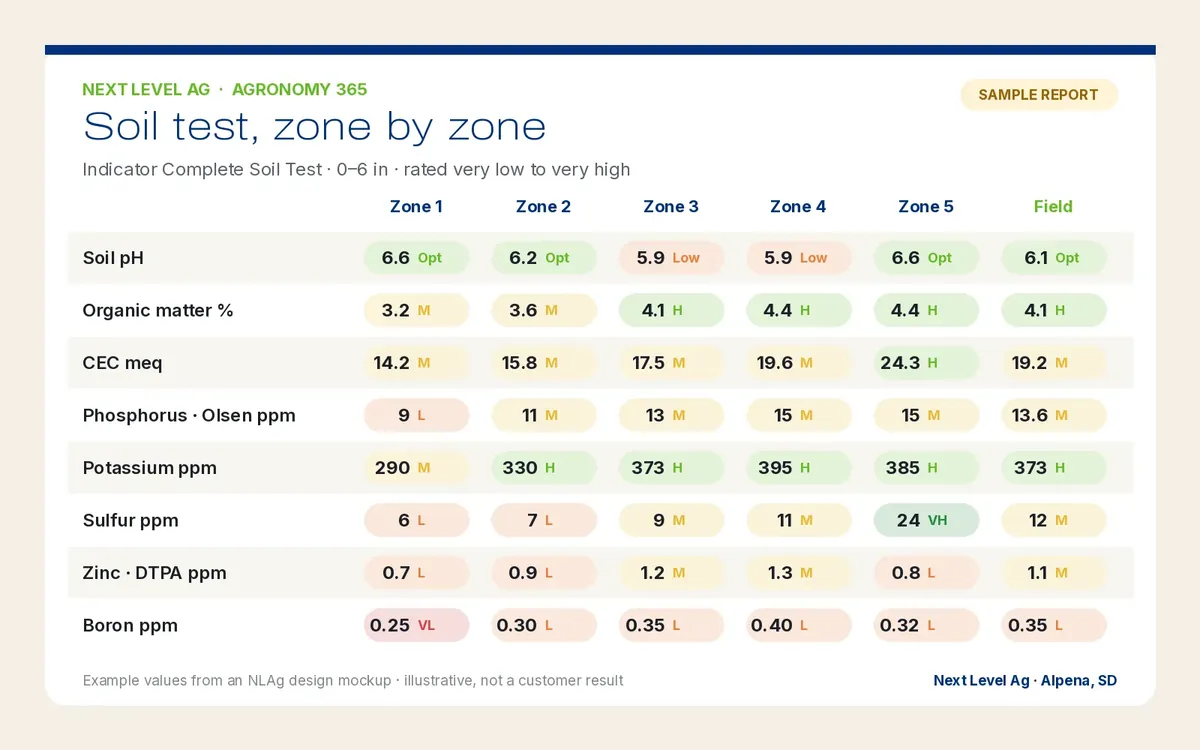
  1. Sample soil test report rating each nutrient by zone
    Sample report · example values, no customer data

    Soil test by zone

    Each primary nutrient is ranked by zone. Scores roll up into an Overall Efficiency Rating, paired with your yield goal to build the recommendation.

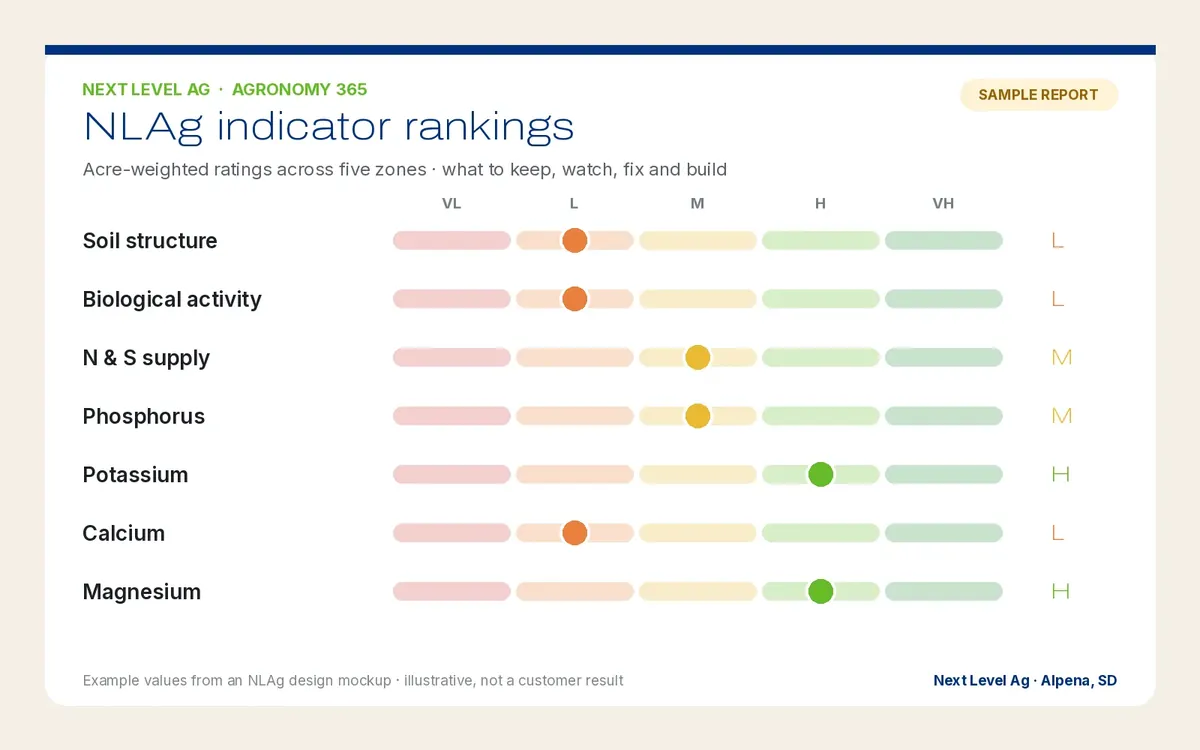
  2. Sample report showing indicator rankings for soil structure, biology and nutrients
    Sample report · example values, no customer data

    Indicator rankings

    Soil structure, biology and nutrients ranked from very low to very high, so you see where to focus first.

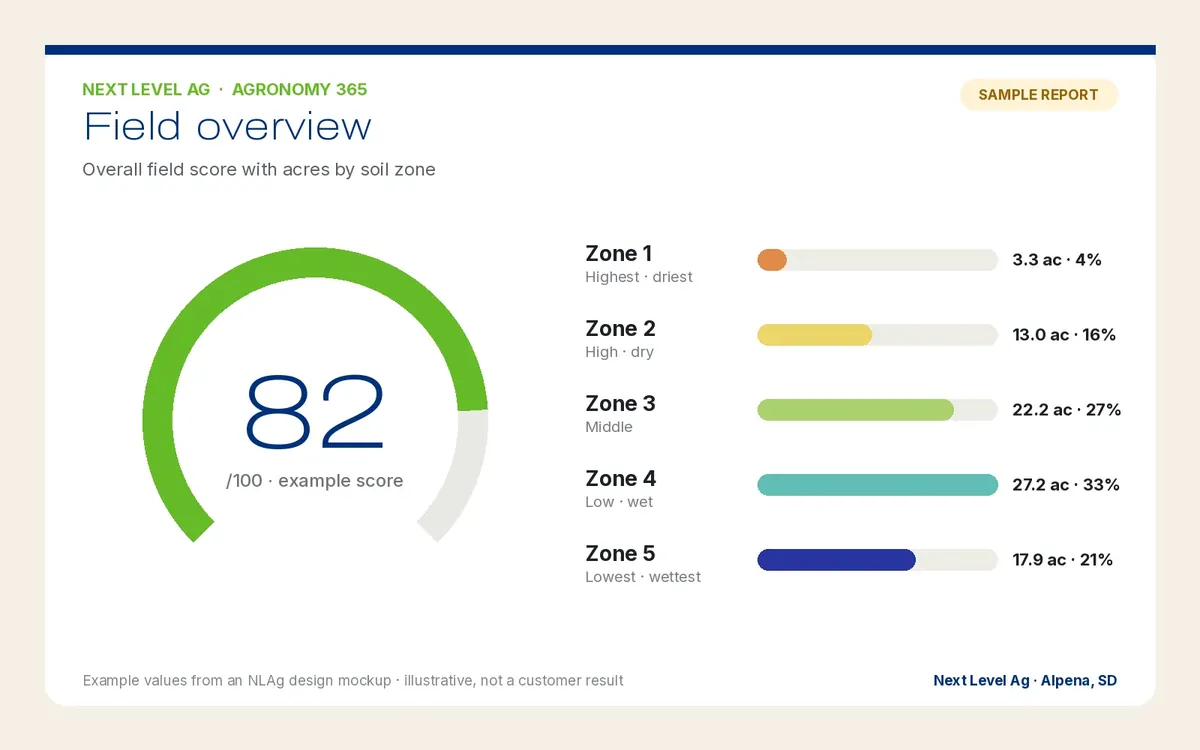
  3. Sample field overview report with a field score and acres by zone
    Sample report · example values, no customer data

    Field overview

    One field score with acres by zone, at a glance.

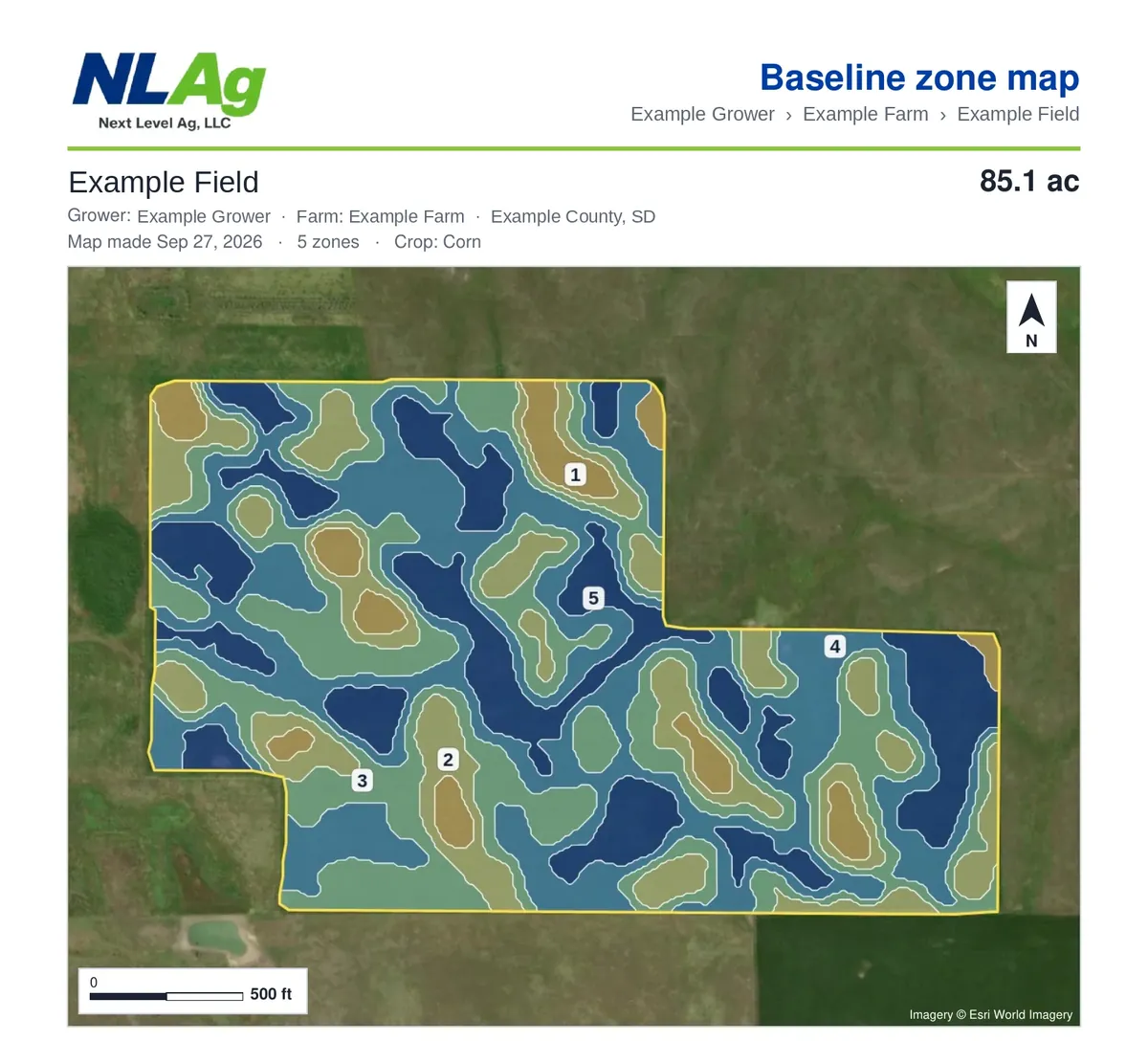
  4. Example Baseline zone map report for an 85-acre example field split into five zones
    Anonymized example · Example Grower, Example Field

    Baseline zone map

    Zones drawn from soil, satellite imagery and topography, with acres and share of field for each zone.

Reports use example values and the map is an anonymized example. No customer data.

See what your fields would get

Request sample bags and a quote. We’ll work with you to pick the right test for the decision.

Agronomy 365

Every field and zone, in one dashboard

Results from Next Level Ag come into Agronomy 365, our reporting and dashboard tool. You see each field and zone over time, not a new PDF every year. Log your samples there before they ship.

Sample soil test report in Agronomy 365, rating each nutrient by zone. Example values only

Get started in 3 steps

From your field to a plan, without the guesswork

Get Started
  1. 1

    Request sample bags

    Call the lab at (605) 849-5227 or email lab@nextlevelag.com. Or use the form below.

  2. 2

    Pull and ship your samples

    Label each paper bag with grower, field and zone. Box them and ship, or drop them off at our Alpena lab.

  3. 3

    Get results and recommendations

    Results and zone-by-zone recommendations land in your Agronomy 365 dashboard, field by field, year over year.

In season

The lab keeps testing all season.

Zones set where each sample comes from. Then the plan gets rechecked: SET before side-dress, tissue in season, leaf analysis late season, yield at harvest.

The season, zone by zone

    Example Field/Season plan Example values
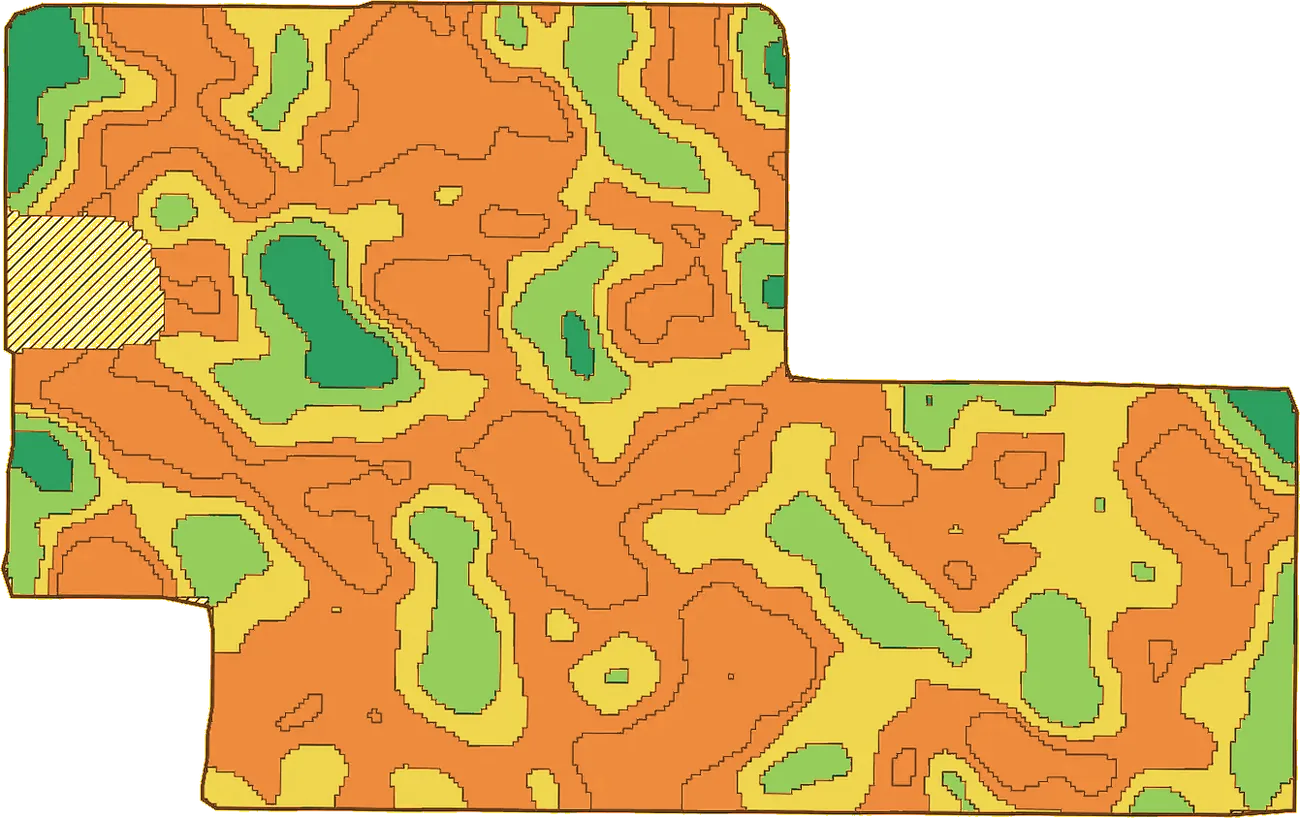
    Example field split into five management zones
    In-season · soil

    Side-dress Efficiency Test (SET)

    A soil test pulled in-season, before the side-dress pass. It recalibrates the plan for what Mother Nature has given or taken since spring, so the side-dress rate matches what the zone has now.

    Late season · leaf

    Late-season leaf analysis

    Late-season leaf analysis makes the last pass count. Leaves from the same zones show what the crop is taking up, so the final application goes where it pays.

    Who it’s for

    Accurate numbers are where we start, not where we stop.

    Most labs hand you numbers. We take the data to the field and turn it into a fertility plan that pays the farm and builds the soil.

    Growers

    A plan for every field, not a page of ppm

    • Zone-based recommendations tied to your yield goals, soil and costs
    • Fertility put where the soil can use it, so input dollars go further
    • Learning Blocks that show what the prescription paid
    Agronomists & retailers

    Lab data you can build a rate call on

    • Accurate, consistent soil, tissue, water and grain results
    • Reports that rank what matters for the person making the call
    • Variable-rate fertilizer and seeding scripts sent to you or the monitor
    U.S. & Canada

    Serving growers across the U.S. and Canada

    • Ship your samples to our lab in Alpena, SD
    • Every field and zone kept over time in Agronomy 365
    • A real person on the phone, Mon–Fri 7 AM–5 PM

    What you get

    01Fertility managementManaged to the soil, not to an average
    02Farmer ROIDollars put where they return the most
    03Soil productivityA field that produces more over time
    04Levels + ratiosRead together, then written into the rec
    05The closed loopTest, rec, Rx, verify against yield

    What we do

    Lab and mapping under one roof

    Next Level Ag lab technician pipetting samples next to soil texture hydrometer cylinders Laboratory

    Laboratory

    Soil, plant tissue, water and grain testing. Soil tests run from the Essential test to Indicator Complete and Indicator Max, with reports that rank what matters for the person making the rate call.

    • Essential · Indicator Complete · Indicator Max
    • Plant Complete tissue · stalk & forage nitrate
    • Water & grain testing
    • ALP proficiency tested for soil & plant
    Explore the Lab
    Soil zone map of a field split into five management zones Mapping Center

    Mapping Center

    Baseline Rx zone maps, variable-rate fertilizer and seeding scripts, and Learning Blocks to check the work — all viewable in Agronomy 365.

    • Baseline Rx zone sampling
    • Variable-rate fertilizer & seeding
    • Learning Blocks to verify what paid
    Explore the Mapping Center

    Start with your field

    Request sample bags & a quote

    Tell us about your acres and what you want to learn. We’ll get bags on the way and work with you to pick the right test for the decision.

    1. 1
      We reply

      A real person at the lab follows up by phone or email.

    2. 2
      Bags ship to you

      With labeling instructions for grower, field and zone.

    3. 3
      Results in Agronomy 365

      Every field and zone, with recommendations.

    I’m interested in

    Goes straight to lab@nextlevelag.com · Mon–Fri 7 AM–5 PM

    FAQ

    Questions before you send samples

    Still not sure? A real person answers the lab line during office hours.

    Call (605) 849-5227
    Hours
    Mon–Fri 7 AM–5 PM
    Lab
    617 Pine Ave N, Alpena, SD 57312
    How do I get sample bags?

    Call the lab at (605) 849-5227 or email lab@nextlevelag.com, or fill out the form above. We use paper sample bags; label each one with grower, field and zone.

    What do you test?

    We test what impacts the farm: soil, plant tissue, water and grain. Soil tests run from the Essential Soil Test to Indicator Complete, our flagship test, and Indicator Max, plus grid packages and individual tests. Plant tissue tests include Plant Complete tissue analysis, stalk nitrate and forage nitrate. For water and grain testing, call the lab at (605) 849-5227 for details.

    Why do you look at nutrient ratios, not just levels?

    A level can look fine on its own and still be out of balance with the nutrients around it. We read the levels and the relationships between them, like base saturation (Ca, Mg and K as a share of CEC), K:Mg and P:Zn, plus tissue ratios like N:S in season. The recommendation comes from both, for your soil and crop, so money goes where it pays and stays in your pocket where it doesn’t.

    Is your lab proficiency tested?

    Yes. Next Level Ag participates in the Agricultural Laboratory Proficiency (ALP) Program, run by Collaborative Testing Services, for both soil and plant tissue testing (ALP covers soil and plant tissue, not water or grain). Our soil and tissue results are checked against other labs on a regular schedule, not just by our own team.

    Where do my results show up?

    In Agronomy 365, our reporting and dashboard tool at dashboard.agronomy365.com. You see each field and zone over time, not a new PDF every year. Results typically come back 2 to 4 days after samples arrive at the lab; timing varies by season.

    What does Baseline Rx include?

    Three pieces: zones (we split the field where the soil actually changes), sampling inside those zones, and a fertility recommendation for each zone built from lab results and your yield goals. Take the whole program or just the piece you need. Each part is available on its own. Contact us for a quote.

    Do you work with farms outside South Dakota?

    Yes. We serve growers across the U.S. and Canada. They ship samples to our lab in Alpena, SD, and results come into their Agronomy 365 dashboard.

    Where are you, and what are your hours?

    Next Level Ag, 617 Pine Ave N, Alpena, SD 57312. Office hours are Monday through Friday, 7 AM to 5 PM. Call (605) 849-5227 or email lab@nextlevelag.com.

    Ready when you are

    Your soil test should tell you what to do. Let’s start with yours.

    Request sample bags and a quote, or call the lab and talk it through. Got an old soil report you’re not sure what to do with? Bring it.

    HoursMon–Fri 7 AM–5 PM
    Lab617 Pine Ave N, Alpena, SD 57312
    Emaillab@nextlevelag.com
    Call Get Started